Introduction: The Information Gateway
In the fast-paced world of 2026, Georgia has emerged as more than just a geographic location; it has become an “Information Gateway” between the East and the West. As the manager of an English-language news platform, I have observed a significant spike in international interest regarding Georgian affairs. But what is driving this? My analysis suggests it’s a combination of Georgia’s unique geopolitical role, its burgeoning tech sector, and its position as a key player in global energy security.
The Geopolitical Pivot: Analytical Deep Dive
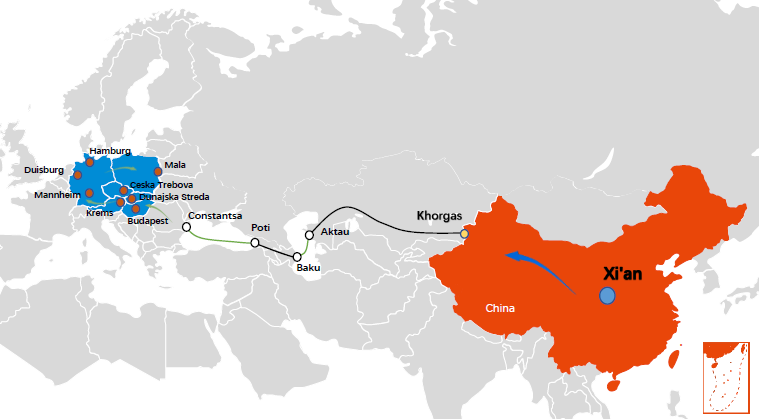
Georgia’s headlines are no longer just about regional disputes. Today, they are about the “Middle Corridor”—the trade route connecting China to Europe via the Caspian and Black Seas. From my perspective, Georgia’s news landscape is now intrinsically linked to global supply chain stability.
When we report on the expansion of the Poti or Anaklia ports, we aren’t just talking about local construction; we are talking about a strategic alternative to northern trade routes. My individual assessment is that Georgia has successfully leveraged its geography to become “too important to ignore.” This gives the country significant diplomatic leverage, but it also places it in the crosshairs of global power competitions. Reporting on this requires a nuanced understanding of both European ambitions and regional realities.
The Digital Transformation of News
The way news is consumed and produced in Georgia has also undergone a revolution. With the full integration of AI and high-speed digital infrastructure, the speed of information flow is unprecedented. However, this brings the challenge of “Information Integrity.”
In my view, Georgia is currently on the front lines of the global battle against disinformation. Because of its strategic position, the country is a target for various influence operations. As an independent news provider, I believe our role has shifted from just “reporting” to “verifying.” The unique value of Georgian news today lies in providing a clear, objective lens that filters out the noise of geopolitical propaganda.
Social Trends: The New Georgian Identity
Beyond politics, the “News” in Georgia is increasingly about social transformation. We are seeing a generation that is more connected, more entrepreneurial, and more environmentally conscious than ever before.
My evaluation of the current social climate reveals a fascinating trend: the “Return of the Diaspora.” Many Georgians who studied and worked in the West are returning, bringing with them global standards and fresh perspectives. This is creating a “New Georgian Identity” that is proudly local but effortlessly global. This trend is a goldmine for human-interest stories that resonate with an international audience.
Economic News: From Tourism to Technology
Traditionally, Georgian news for foreigners was about wine and tourism. While these remain important, the “Big News” in 2026 is about Fintech, Green Energy, and the Startup ecosystem.
My analysis of the economic headlines shows a shift toward high-value sectors. When we report on a Georgian startup reaching a “Unicorn” status or the country launching its first green hydrogen project, we are signaling a mature economy. The challenge for news outlets is to translate these complex economic developments into stories that highlight the country’s growing sophistication.
Conclusion: Why the World is Watching
The world is watching Georgia because Georgia has become a microcosm of the 21st century’s challenges and opportunities. It is a place where ancient tradition meets cutting-edge technology, and where small-state diplomacy meets global strategic interests.
In my final assessment, the story of Georgia in 2026 is one of “Emergence.” The news coming out of Tbilisi today is not just about a country trying to find its way; it’s about a country that has found its direction and is moving forward with confidence. For an international reader, following Georgian news is no longer a niche interest—it is essential for understanding the future of the Eurasian landmass.