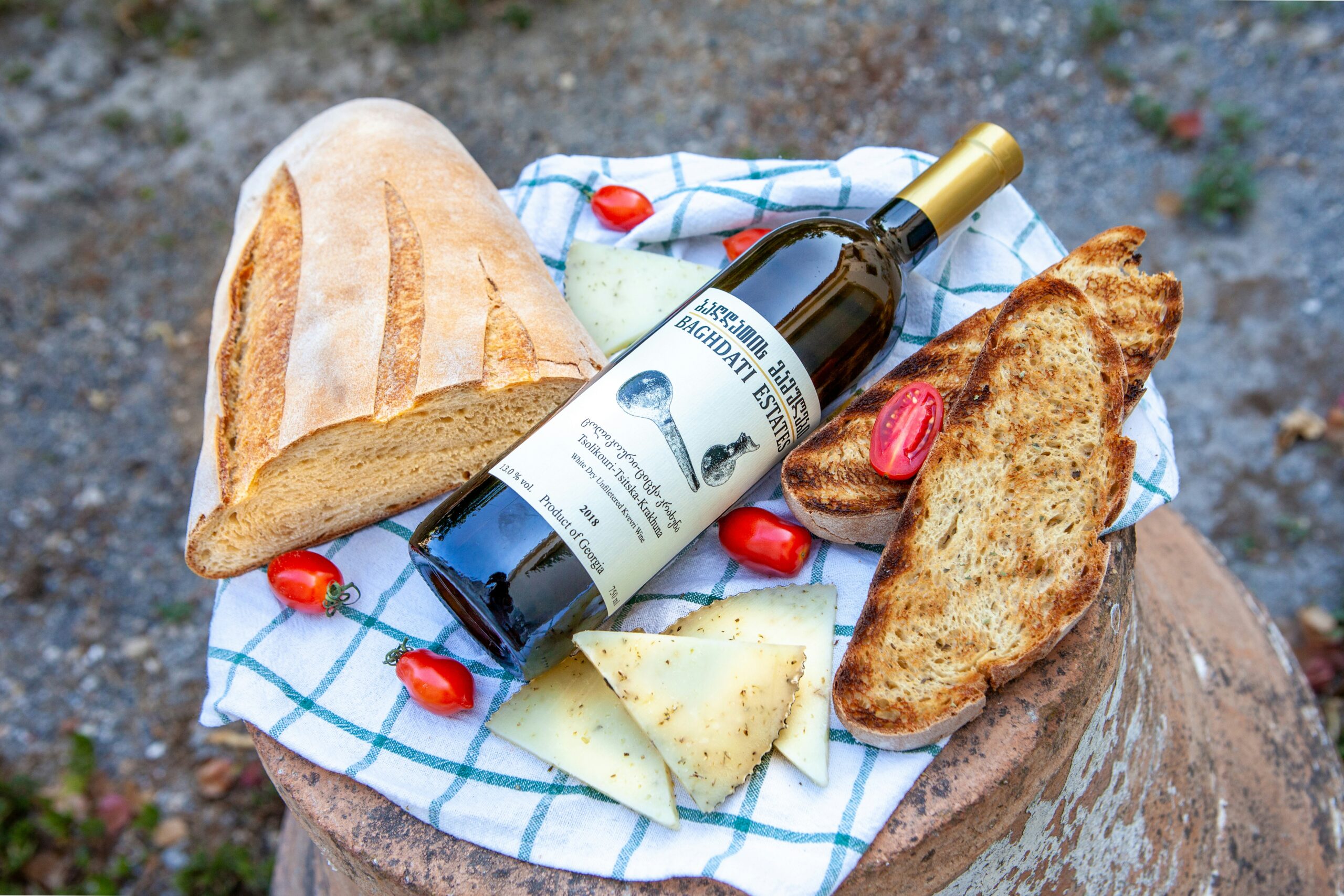
A Legacy of 8,000 Vintages
In Georgia, wine isn’t just a product; it’s our DNA. We often repeat the phrase “8,000 years of uninterrupted winemaking,” and while this historical fact is a source of immense pride, as a business analyst, I have to ask: Is history enough to sustain a modern economy?
For decades, the Georgian wine industry relied heavily on a few neighboring markets, focusing on quantity and sweet, mass-market varieties. But the world is changing. From my perspective, we are currently witnessing the most significant pivot in our viticulture history—a move from “bulk” to “boutique.”
The Qvevri Renaissance and the “Natural” Trend
The global wine world has recently fallen in love with “orange” or amber wines. What the world calls a “trend,” we call Tuesday. Our traditional Qvevri method, which involves fermenting grapes in buried clay vessels, is now the gold standard for the international natural wine movement.
However, here’s my take: the Qvevri isn’t just a vessel; it’s a branding powerhouse. Small family cellars (Marani) are now exporting bottles to high-end restaurants in London, Tokyo, and New York for prices that were unthinkable ten years ago. This shift toward “low intervention” winemaking is where Georgia’s true competitive advantage lies. We aren’t just selling fermented grape juice; we are selling a piece of living history.
The Challenge of Diversification
If you look at the export data, a pattern emerges. While we are making strides in Western markets, a huge percentage of our volume still goes to traditional, often volatile, markets.
In my opinion, the biggest risk to the Georgian wine business is over-dependence. A geopolitical shift or a sudden change in trade regulations can cripple the industry overnight. The solution? We must focus on the “Quality over Quantity” mantra. Instead of producing millions of liters of cheap semi-sweet wine, our strategy should be to dominate the $30-$50 price bracket in the EU and the US.
Innovation in the Vineyard: Technology Meets Clay
It might sound contradictory to use high-tech solutions for an 8,000-year-old craft, but it’s happening. Some of the most forward-thinking Georgian producers are now using satellite imagery for precision viticulture and blockchain technology to guarantee the authenticity of their Saperavi or Rkatsiteli.
As someone who tracks digital transformation, I find this fascinating. By providing a “digital twin” of a bottle—where a customer in San Francisco can scan a QR code and see the exact vineyard and the soil chemistry of their wine—Georgia can build a level of trust that mass-producers in Italy or France simply can’t match at that scale.
The Sustainability Factor
The 2026 consumer cares about more than just taste; they care about the planet. Georgia’s indigenous grape varieties (over 500 of them!) are naturally resilient. By leaning into organic and biodynamic certifications, Georgian winemakers can position themselves as leaders in sustainable agriculture.
I believe that “Green Wine” is the next frontier. If we can marry our ancient organic traditions with modern certification standards, the “Made in Georgia” label will become synonymous with environmental purity.
Final Verdict: The Road Ahead
Georgia’s wine industry is at a crossroads. We can continue to be a regional supplier of affordable wine, or we can become the world’s leading destination for premium, ancestral vintages.
My conclusion is that the future of ambebi.space’s coverage of this sector should focus on the innovators—the winemakers who aren’t afraid to experiment with the old ways to meet new demands. The Qvevri brought us through 8,000 years; now, it’s our business intuition that will take us through the next thousand.